Jars, pouches or sticks? Choosing packaging for supplement powders
Compare powder packaging through the customer’s routine, serving method and product requirements — then turn those choices into a brief your manufacturer can assess.
Start with use, not appearance
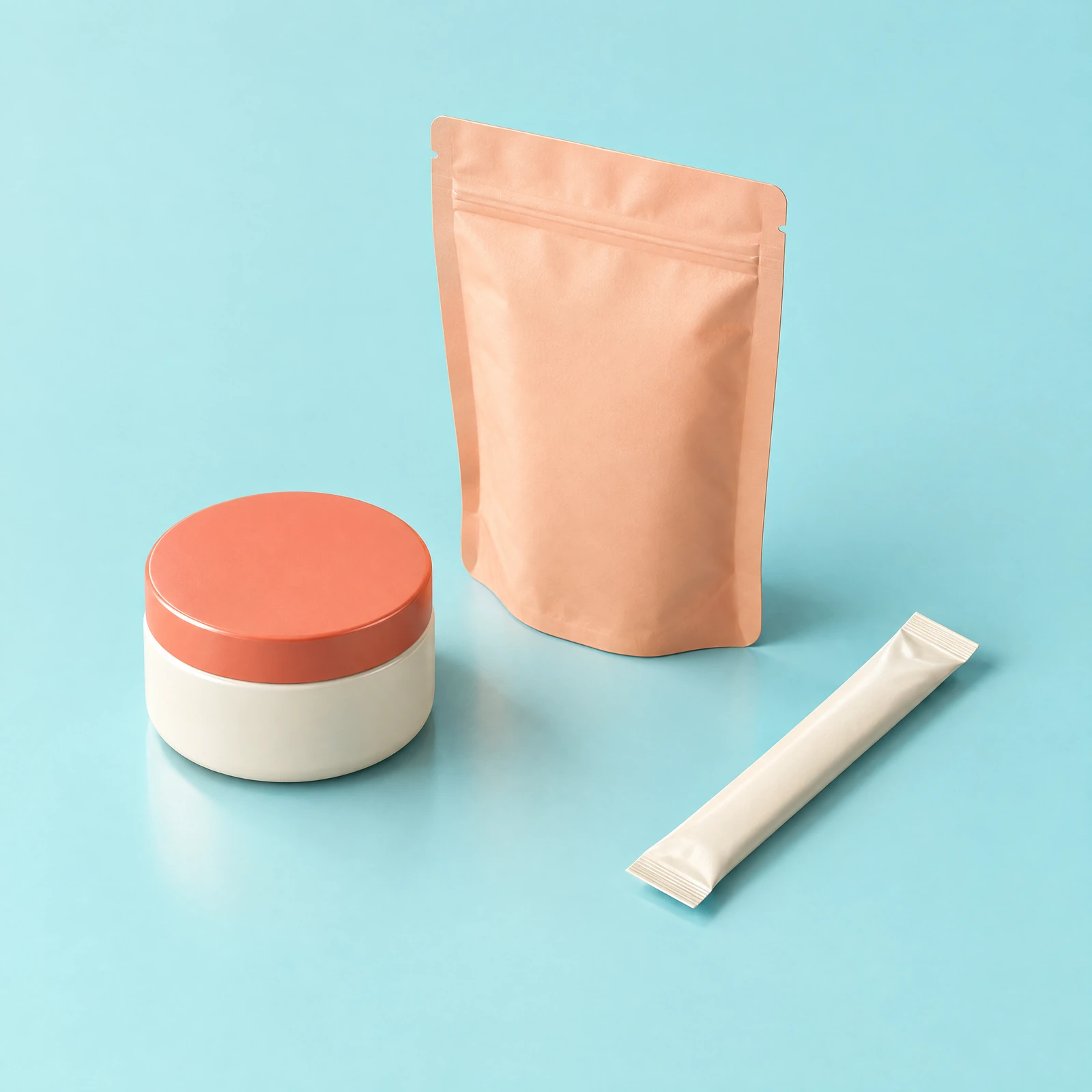
A pack has to do more than look good in a launch photograph. It needs to suit the product, the way it is filled and the way a customer uses it. Before comparing a jar, pouch and stick, describe the intended serving routine. Will the product stay on a kitchen shelf, travel in a bag or be used a portion at a time?
Keep the formula and packaging conversations connected. The suitability of a material, closure or fill size depends on the product and project requirements. Ask the manufacturer to assess those choices together. Do not assume that an attractive container used for one powder is automatically suitable for another.
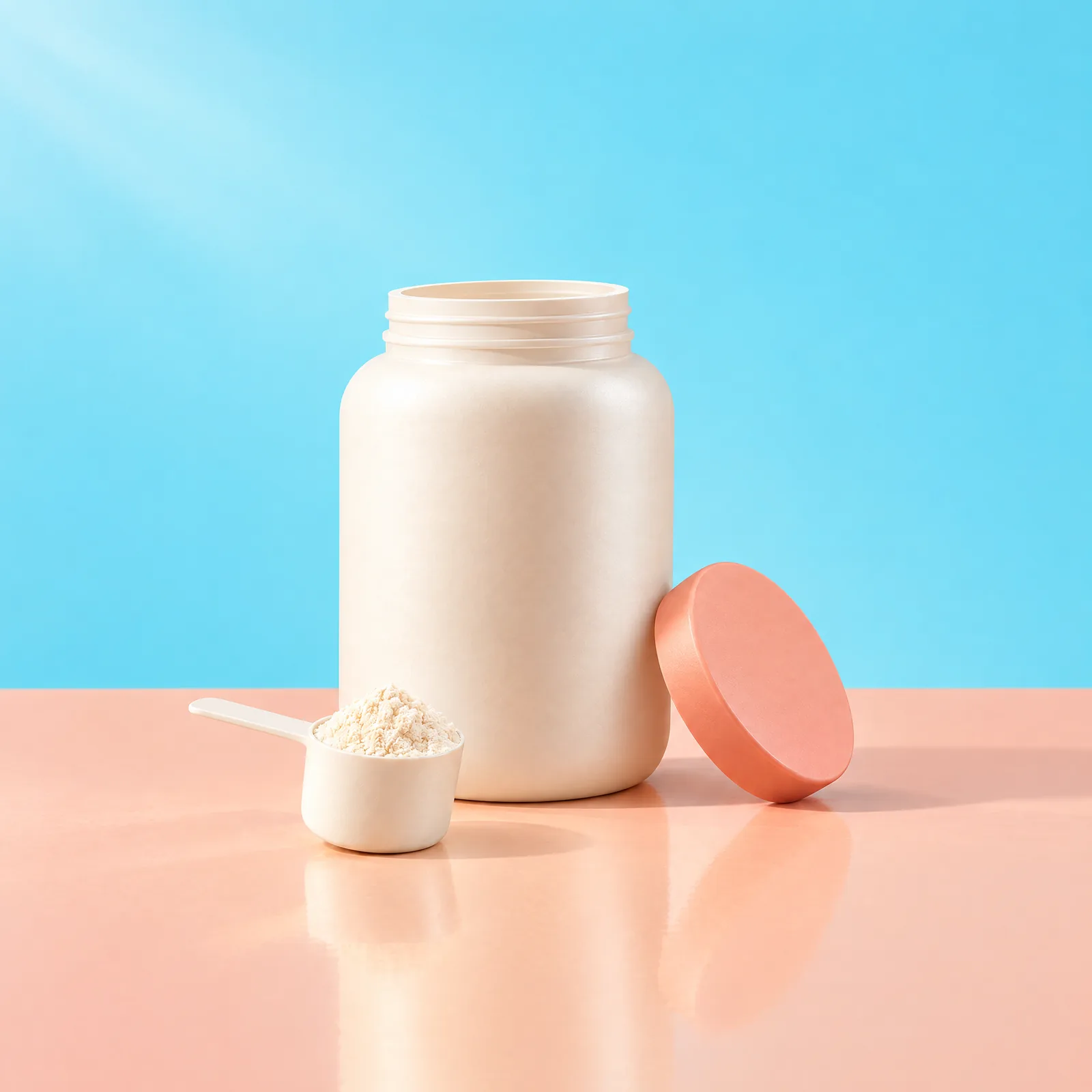
A jar: consider repeated access
A jar is worth exploring when the concept centres on a multi-serve product and repeated opening. Discuss the opening size, closure, scoop arrangement and how the customer will reach the contents as the pack empties. Review the actual container dimensions, not just a front-facing artwork render.
Confirm how the requested fill weight relates to the powder and selected container. Ask about headspace, sealing options and the information needed to establish pack suitability. When comparing quotes, identify the jar, cap and any additional components explicitly so the packaging specification remains consistent.
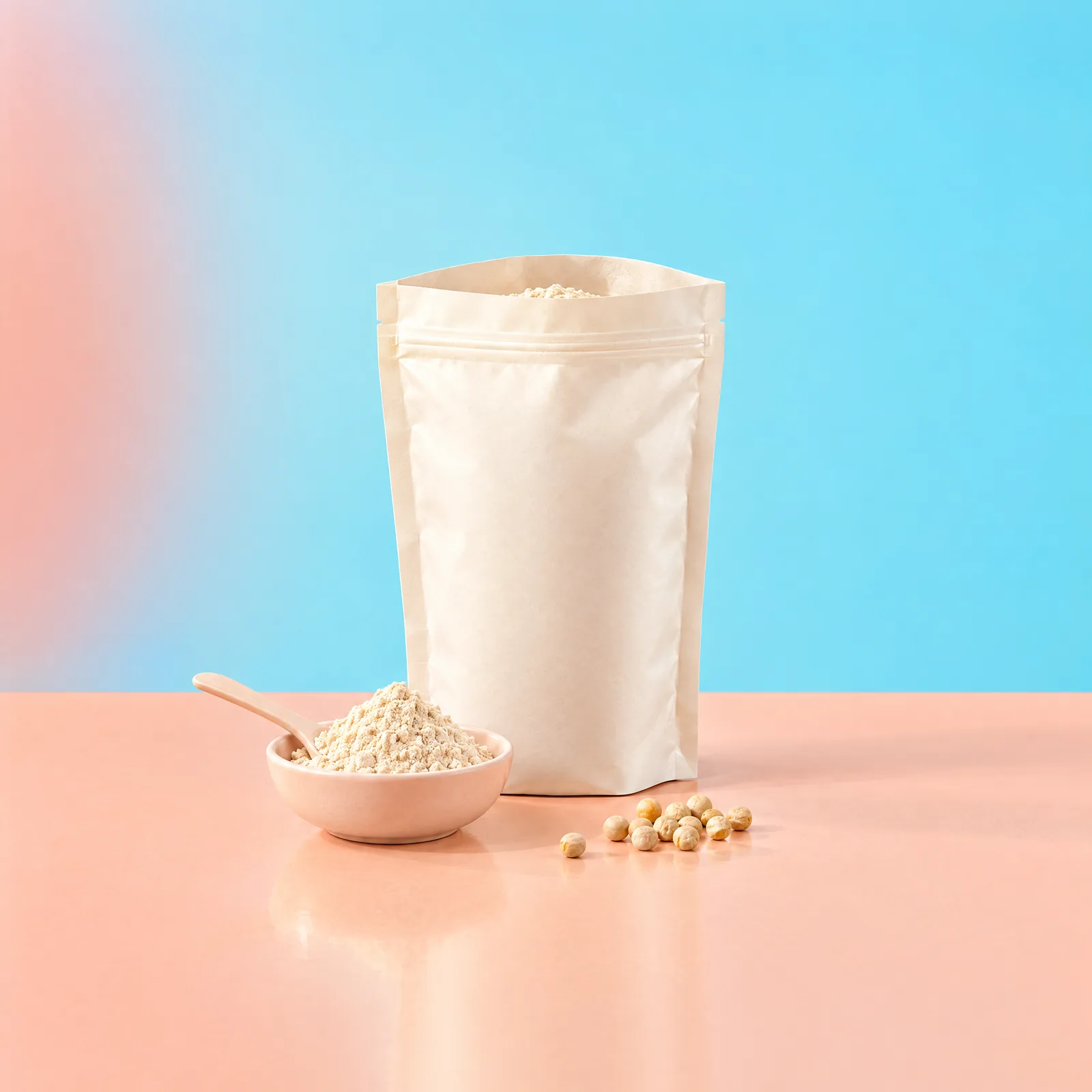
A pouch: examine the everyday details
A pouch offers a different handling and presentation experience. For a multi-serve concept, discuss how it opens, recloses and stands during use. Ask where a scoop would sit and whether the chosen shape makes the powder easy to access. A sample pack is useful for testing these practical details before committing to artwork.
Discuss the material structure and barrier requirements with the manufacturer. Avoid treating all pouches as equivalent, or assuming that a lighter-looking pack is automatically the more sustainable choice. Material combinations, product protection and the disposal options in the destination market all need consideration.
A stick: define the individual serving
Single-serve sticks may suit a concept built around portioned preparation or portability. Define the intended serving weight, opening experience and preparation method, then ask how those requirements affect the pack dimensions and filling approach. Consider whether individual sticks will be sold inside an outer pack and include that outer pack in the brief.
The available print area is different from that of a jar or large pouch. Request the correct artwork layout and check how product identification and required information will be presented across the complete sales unit. Discuss the filling and packaging minimums for the proposed configuration rather than assuming the same commercial terms apply to every format.
Compare complete packaging proposals
Build a comparison around the same set of questions: container or film specification, serving and fill size, closure, artwork requirements, minimum order, component availability, testing needs and quoted scope. Include any outer packaging and transport assumptions. This makes it easier to see what each option actually delivers.
For environmental claims, ask for supporting material information and consider the intended market’s collection systems. For the customer experience, handle a representative pack and walk through opening, serving and storage. The right choice is the one that works for your formula, brand and customer together. Bring your preferred jar, pouch or stick direction to Vitaminlabs and discuss the options for your powder project.
Planning a product? Explore our private label and custom formulation approach or discuss your manufacturing brief.